
Open a food delivery app and watch what happens. A map shows where your rider is, your card is charged, a confirmation arrives by message and the restaurant’s kitchen screen lights up with your order. It feels like one seamless product, but behind the scenes several separate systems are talking to each other. The language they use is called an API, short for application programming interface.
APIs are among the most important and least visible technologies in modern business. Understanding them, even at a high level, helps leaders make better decisions about which software to buy, which processes to automate and how to build products that fit into the wider digital world.
01A restaurant analogy
The classic explanation of an API uses a restaurant. You, the customer, don’t walk into the kitchen and cook. You read a menu, which lists what is available, and you place an order with a waiter. The waiter takes the request to the kitchen and brings back your meal. You never need to know how the kitchen works.
An API plays the role of the menu and the waiter. It defines what one system can request from another, in what format, and what it will receive in return. The calling system doesn’t need to know how the other one is built internally, only how to place a valid order.
An API is a promise: ask me in this way, and I will answer in that way.
02Why APIs matter for business
- They eliminate double entry: when systems exchange data directly, nobody has to copy it by hand.
- They keep information consistent: a change made in one place appears everywhere it is needed.
- They enable automation: workflows can move across tools without human handoffs.
- They speed up innovation: instead of building everything, teams can combine proven services.
- They create opportunities: offering your own API can let partners build on top of your services.
Many of the productivity problems businesses face are, at heart, integration problems. Sales data lives in one tool, invoices in another and support tickets in a third. Each tool is fine on its own, but the gaps between them are filled with spreadsheets and manual work. APIs are how those gaps get closed.
03What makes a good API
Not all APIs are created equal. A good one is clearly documented, so developers can understand it without guesswork. It is versioned, so changes don’t suddenly break the systems that depend on it. It is secured, typically with keys or tokens that identify who is calling and limit what they may do. And it is monitored, so problems are noticed before customers notice them.
Reliability deserves special attention. When your business depends on another service’s API, its outages become your outages. Well-built integrations anticipate this: they retry sensibly, queue requests when a service is unavailable and alert someone when something has been failing for too long.
04Security considerations
Because APIs expose data and actions to other systems, they are also an attractive target for attackers. Access keys should be treated like passwords: stored securely, never shared in emails or code repositories, and rotated regularly. Each integration should receive only the permissions it needs, and unusual activity, such as a sudden spike in requests, should trigger an alert.
05Building your own API
Sooner or later, many businesses find that others want to connect to them: a partner who wants to place orders automatically, a client who wants data delivered into their own systems, or an internal team building a mobile app. Offering an API turns these requests into a repeatable service instead of a series of one-off projects.
Designing an API is an exercise in empathy. The people who will use it don’t know your internal systems, so names should be clear, responses consistent and errors explained in a way that helps developers fix the problem. Start small, with the few operations that partners actually need, and expand based on real demand.
Treat an API like a product. Publish documentation with examples, provide a safe test environment, communicate changes well in advance and keep older versions working for a reasonable period. Partners who can integrate easily and reliably are far more likely to build long-term relationships on top of your services.
06The connected future
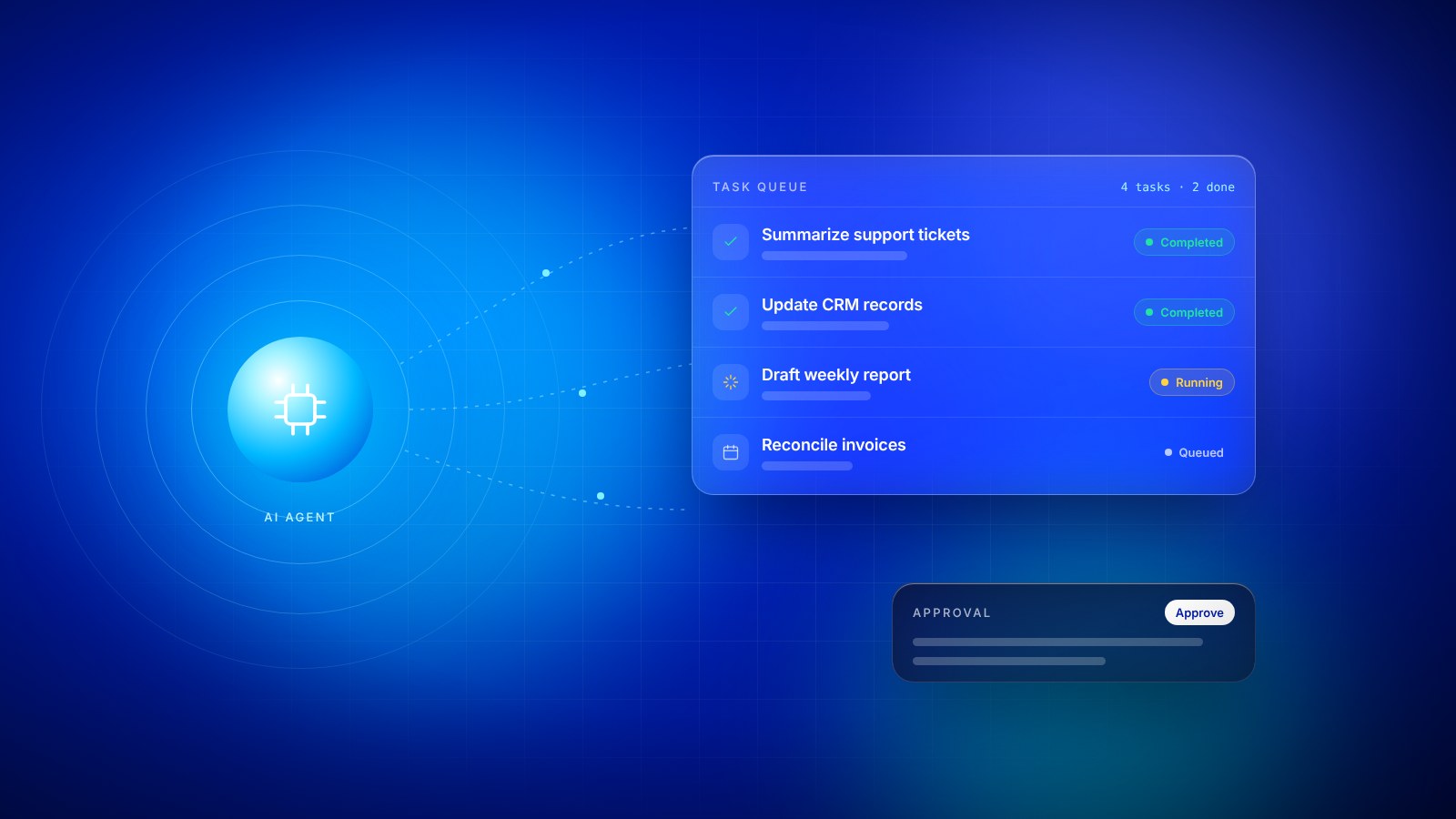
APIs are also how AI systems are increasingly put to work. An AI assistant becomes far more useful when it can check a calendar, look up an order or update a record, and each of those abilities is typically delivered through an API. The more connected a business’s systems are, the more value it can extract from new technologies as they arrive.
You may never see an API, but you rely on hundreds of them every day. For businesses, treating integration as a strategic priority rather than a technical afterthought is one of the quietest and most effective ways to work faster.
Key takeaways
- 01An API is a contract that lets one piece of software request something from another.
- 02Connecting systems through APIs removes manual copying and keeps data consistent.
- 03Good APIs are documented, versioned, secured and monitored.
- 04When choosing software, check what it can connect to before checking its features.