The pitch for cloud computing was irresistible: no more buying servers in advance, no more guessing future capacity, just pay for what you use. For many businesses, the reality turned out to be more complicated. Bills grow month after month, often faster than revenue, and nobody can quite explain why. The cloud does let you pay only for what you use. The problem is that it is very easy to use far more than you need.
01Where the money really goes
Cloud waste rarely comes from one big mistake. It accumulates from many small ones, each easy to make and easy to forget:
- Idle resources: test servers left running over weekends and holidays, or long after a project ended.
- Oversized machines: servers chosen generously “to be safe” and never adjusted to real usage.
- Forgotten storage: old backups, snapshots and logs kept indefinitely.
- Data transfer: moving data between regions or out to the internet, which is often priced separately and easy to overlook.
- Orphaned experiments: a quick proof of concept that quietly became a permanent monthly charge.
In the cloud, every forgotten resource is a subscription you didn’t know you signed up for.
02Visibility first
You can’t manage what you can’t see. The first step toward control is making every cost traceable. Most cloud platforms let you attach tags to resources, such as which project, team, environment and owner each belongs to. With consistent tags, a confusing total bill becomes a clear breakdown: this product costs this much, this test environment costs that much, and this unknown machine needs an owner or an off switch.
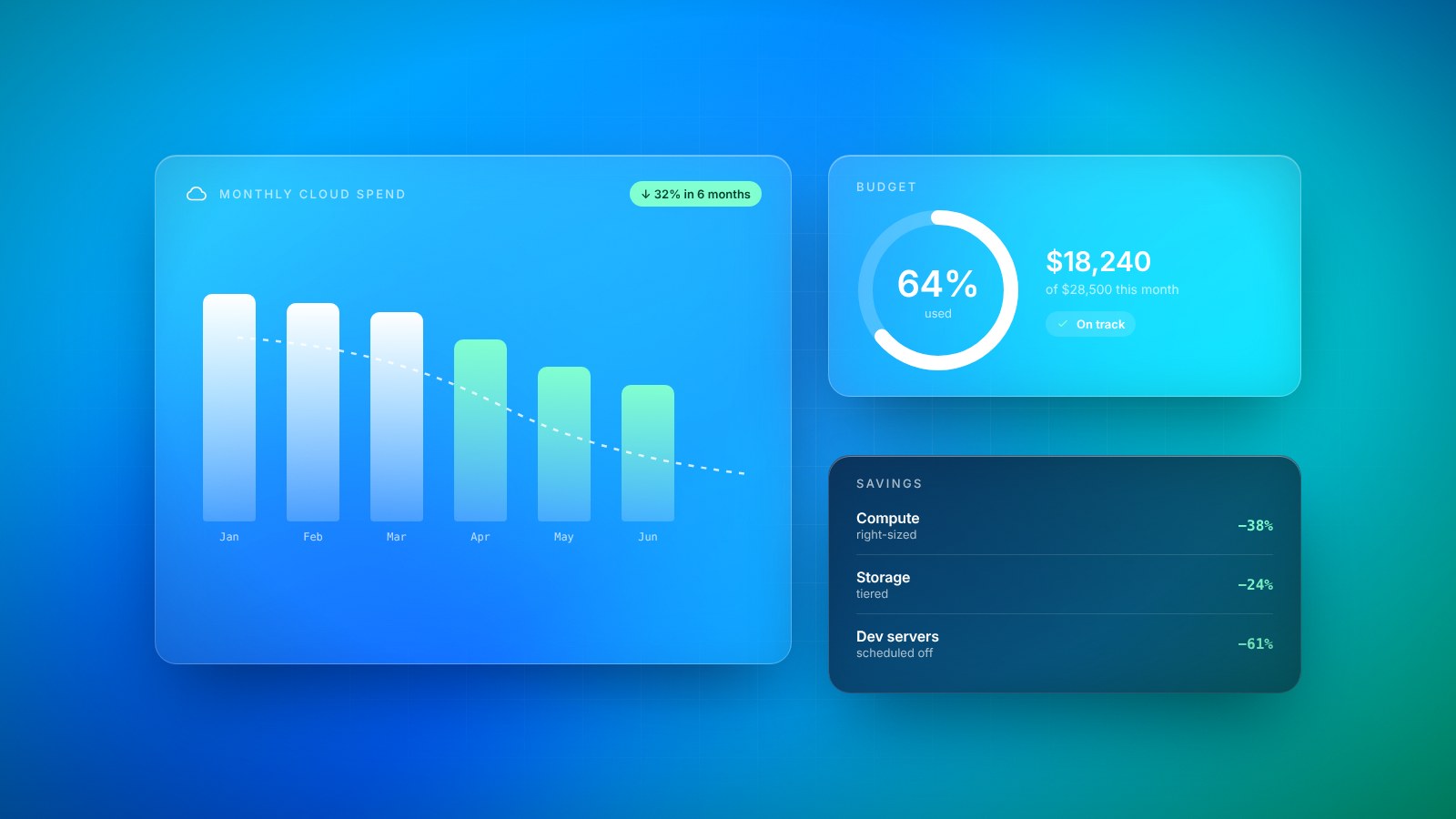
Set up budget alerts as well. A notification when spending crosses a threshold turns a surprise at the end of the month into a conversation in the middle of it, while there is still time to act.
03Right-size and schedule
Once you can see usage, the opportunities become obvious. Many servers run at a small fraction of their capacity and can be moved to a smaller, cheaper size with no visible impact. Development and test environments rarely need to run at night or on weekends; scheduling them to shut down outside working hours can significantly reduce their cost.
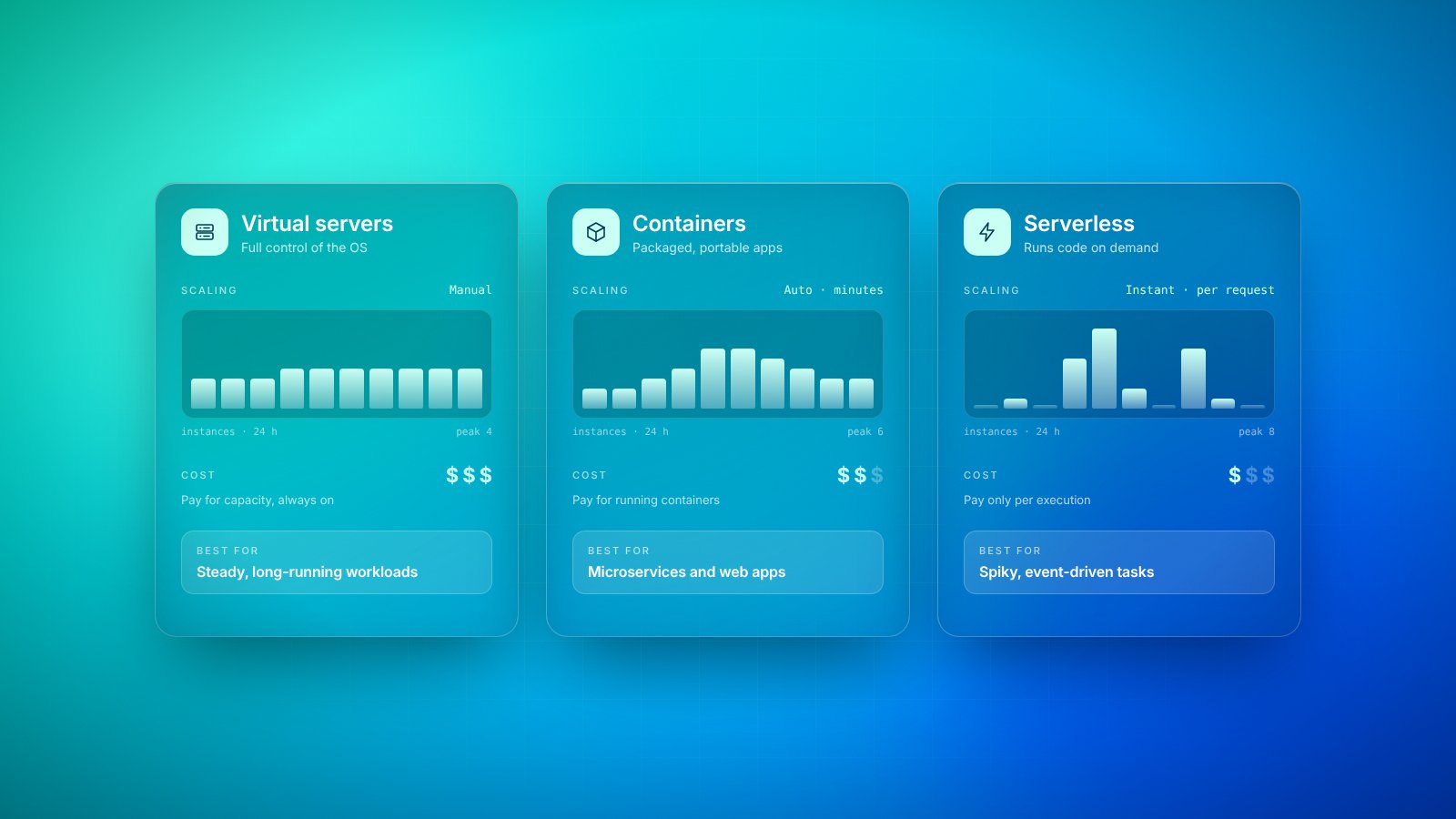
For workloads that vary through the day, automatic scaling adds capacity when demand rises and removes it when demand falls. For workloads that are steady and predictable, most providers offer substantial discounts in exchange for committing to a level of usage over a longer period.
04Design for efficiency
Architecture choices have a lasting effect on cost. Serving pre-built pages and files from a content delivery network is far cheaper than generating them on every request. Moving older data to cheaper storage tiers, and setting rules to delete what is no longer needed, keeps storage bills from growing indefinitely. Choosing managed services can reduce the hidden cost of maintenance, even when the sticker price looks higher.
05Hidden costs beyond the invoice
The cloud bill is the most visible cost, but not the only one. Complex setups with many services, regions and custom configurations take time to understand, maintain and secure. That time is a real cost, even if it never appears on the provider’s invoice. Sometimes paying slightly more for a simpler, managed service is the cheaper option overall.
There is also the cost of dependence. Building heavily on features unique to one provider can make it expensive to move later, which weakens your negotiating position. This doesn’t mean avoiding those features entirely, as many of them are excellent, but it does mean making the choice consciously and knowing which parts of your system would be hard to move.
Finally, consider the cost of surprises. A sudden traffic spike, a misconfigured job that runs in a loop or a leaked access key used to run someone else’s workloads can generate large bills in hours. Spending limits, alerts and careful key management are inexpensive insurance against expensive mistakes.
06Make cost everyone’s job
The most effective cost control is cultural. When the people who build and run systems can see what their choices cost, they naturally make better ones. Sharing cost reports with technical teams, celebrating savings and including cost in design discussions turns spending from a finance problem into a shared engineering responsibility.
The cloud remains one of the most powerful tools available to businesses of any size. Used thoughtfully, it really does let you pay for what you use. The key is making sure that what you use is what you actually need.
Key takeaways
- 01Cloud bills grow through idle resources, oversized machines and forgotten experiments.
- 02Tag every resource with an owner and a purpose so costs can be traced.
- 03Right-size, schedule and automatically shut down what isn’t needed.
- 04Review spending monthly and treat cost as a shared engineering responsibility.