For years, the default instinct in business was to collect everything. Every form asked for one more field, every app requested one more permission, and every database kept records forever “in case they become useful”. Storage was cheap, and data felt like an asset that could only grow in value.
That instinct has aged badly. Every piece of personal data you hold is something you must protect, explain and eventually dispose of. It increases the damage of a breach, the effort of answering customer requests and the complexity of complying with privacy laws. Privacy by design turns the old instinct around: build systems that collect less, keep it for less time and show people exactly what happens to their information.
01What privacy by design really means
Privacy by design is the idea that protecting personal data should be built into products and processes from the start, not added later as a patch. It is less about a single technology and more about a habit of asking the right questions early. What do we need? Why? Who can see it? How long will we keep it? When those questions are answered during design, privacy costs little. When they are answered after launch, it usually means painful rework.
Privacy laws in many parts of the world now expect this approach, and some require it explicitly. The details vary by country and sector, so it is worth getting proper legal advice for your situation. But the underlying principles are remarkably consistent, and following them puts most businesses on solid ground.
02Collect less, on purpose
Data minimization is the heart of privacy by design. For every piece of personal information you collect, you should be able to name the purpose it serves. If a newsletter sign-up asks for a phone number and a date of birth, someone should be able to explain why. Often nobody can, and the field exists only because a template included it.
Data you never collect can never be leaked, misused or requested back.
Review your forms, apps and integrations with fresh eyes. Remove optional fields that nobody uses. Ask for an age range instead of a full birth date, or a city instead of a full address, when that is all the purpose requires. Less data also tends to mean shorter forms, which people are more likely to complete.
03Consent people can understand
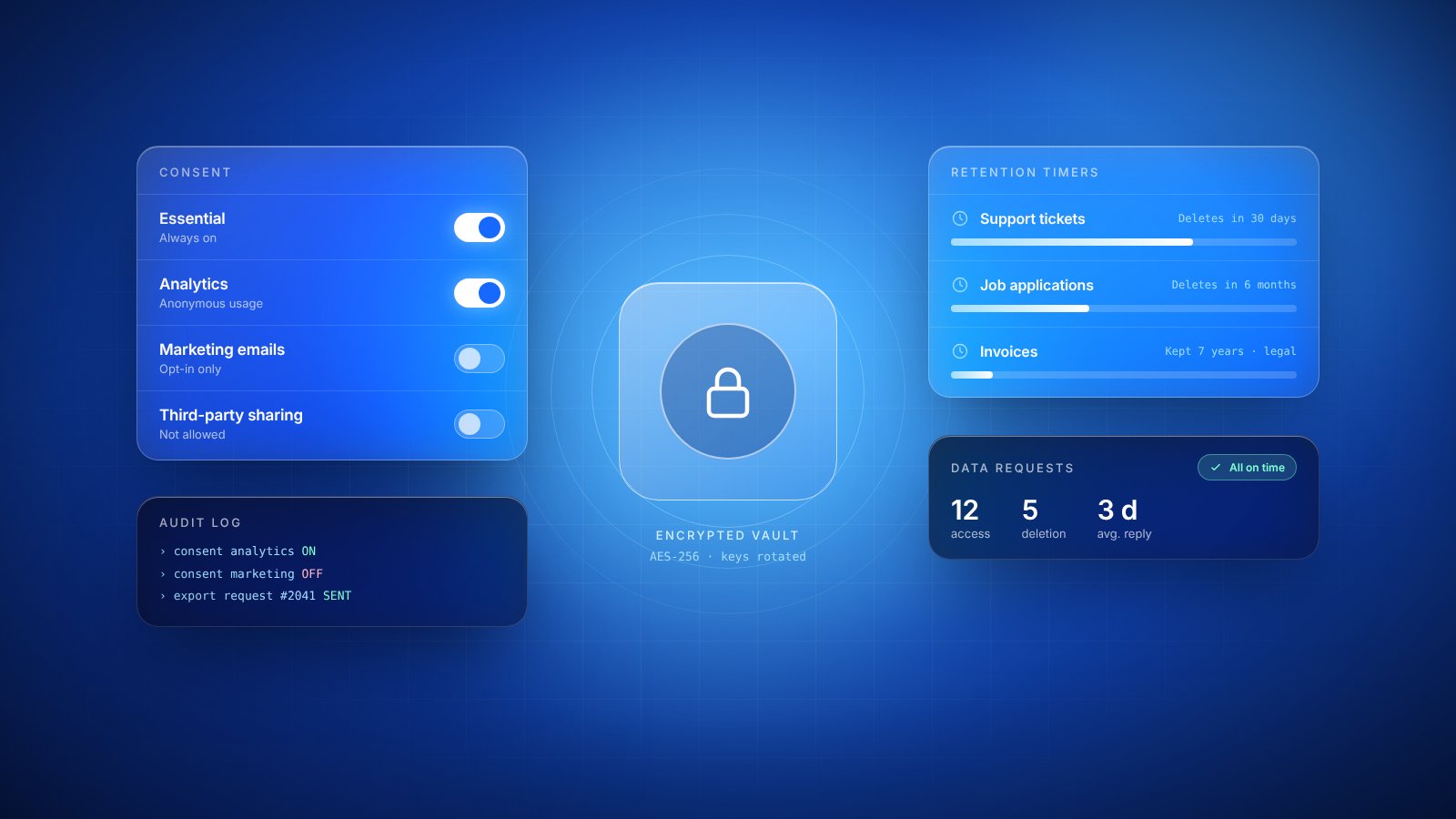
Consent only means something when people know what they are agreeing to. Long legal texts, pre-ticked boxes and banners designed to push everyone toward “accept all” may tick a box internally, but they erode trust and increasingly fall short of what regulators expect. Good consent is specific, written in plain language and separated by purpose, so someone can agree to order updates without agreeing to marketing.
Just as important, withdrawing consent should be as easy as giving it. If signing up takes one click but unsubscribing takes a phone call, the design is telling customers something about how you see them. Record when and how consent was given, so you can show it later if anyone asks.
04Keep it only as long as you need it
Old data is one of the most overlooked risks in any organization. Records from former customers, applicants from years ago and exports saved on shared drives all remain your responsibility. A clear retention policy helps you decide what to keep and for how long, and makes deletion a routine rather than a crisis. A simple policy usually covers a few key points:
- Categories: group data by type, such as customers, employees, applicants and website visitors.
- Purpose: state why each category is kept and what it is used for.
- Retention period: set how long each category is needed, including any legal minimums.
- Deletion method: describe how data is removed or anonymized when the period ends.
- Owner: name who is responsible for making sure it actually happens.
Where possible, automate deletion so it does not depend on someone remembering. And remember backups, test environments and spreadsheets exported for a one-off report; they often hold copies long after the original records are gone.
05Limit who can see what
Not everyone in an organization needs access to all personal data. A support agent may need a customer’s order history but not their payment details. A marketing analyst may need trends, not names. Role-based access, where permissions follow job responsibilities, keeps sensitive information in fewer hands and makes it easier to see who accessed what.
Techniques such as pseudonymization, where names are replaced with codes, and encryption, which makes stored data unreadable without a key, add further layers. They do not remove responsibility, but they reduce the harm if something goes wrong. Review access regularly, especially when people change roles or leave.
06Transparency as a competitive advantage
Many people have learned to distrust how organizations handle their data. That creates an opportunity for businesses that do it well. A privacy notice written in plain language, a simple page where customers can see and manage their information, and quick, friendly answers to data requests all signal respect. They become part of the customer experience, not just a compliance exercise.
Privacy by design also makes the business itself easier to run. Smaller datasets are cheaper to store and secure, simpler to search and easier to keep accurate. When a customer asks what you hold about them, you can answer in minutes rather than weeks. When a partner or larger client asks about your data practices, you have clear answers ready.
The shift starts with a simple change in mindset: personal data is borrowed, not owned. Treat it that way, collecting only what you need, protecting it carefully and returning or deleting it when you are done, and trust tends to follow.
Key takeaways
- 01Collect only the personal data you can name a clear purpose for.
- 02Make consent specific, honest and as easy to withdraw as it was to give.
- 03Set retention periods and delete data when its purpose has ended.
- 04Treat clear, respectful privacy practices as part of your customer experience.